
Europe’s public procurement rules: Opportunity to help responsible corporate tax conduct
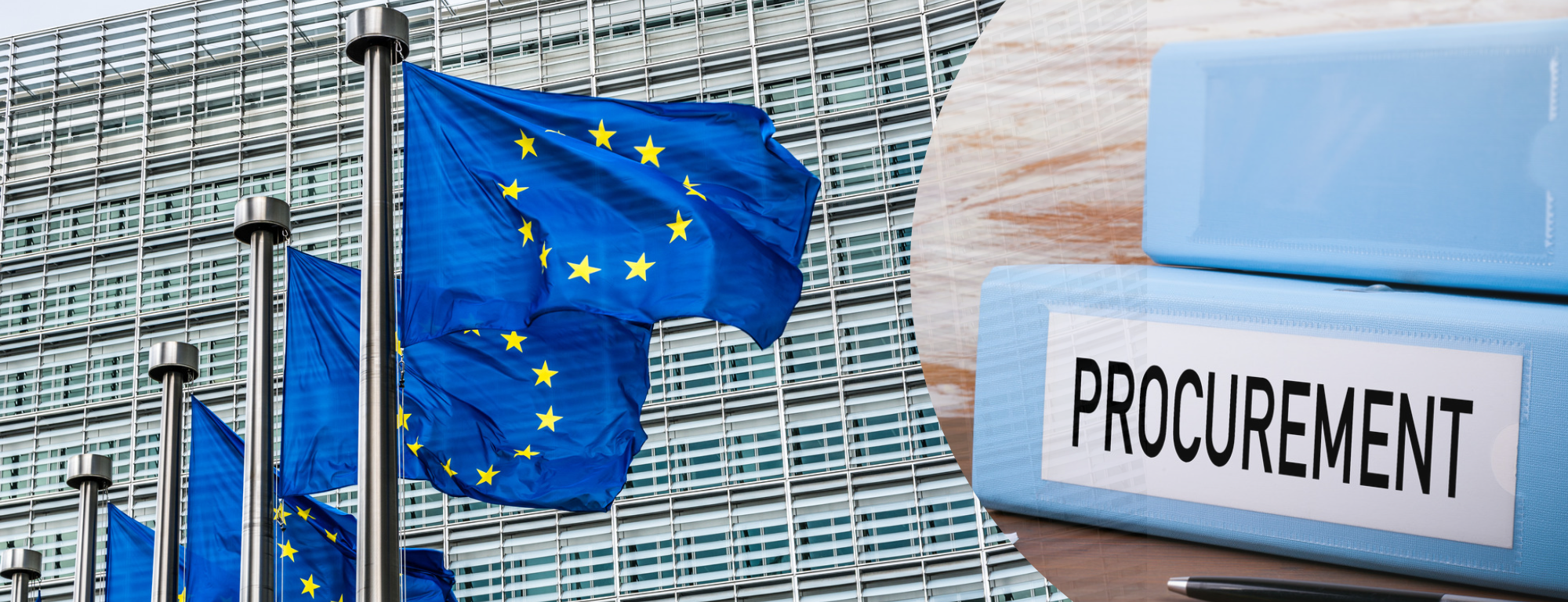
Like many, the Fair Tax Foundation believe public authorities that are spending the public’s money should be free to prefer suppliers that demonstrate responsible tax behaviours. Corporate tax conduct should be one of the factors they are allowed to weigh up when it comes to deciding who does and does not win public contracts.
Unbelievably, the newly proposed EU Public Procurement Act, COM(2026) 590, effectively blocks the actioning of such considerations by Member States. The directly applicable regulation is set to apply two years after it enters into force, and the EU institutions are aiming to conclude negotiations in the fourth quarter of 2027. This cycle will not reopen for a decade.
In 200 pages of operative text and 74 pages of annexes, responsible corporate tax conduct is not referenced a single time! We have a general rule at the Fair Tax Foundation about using exclamation marks sparingly. Well, in this instance they are merited! Public procurement in the European Union is worth an enormous €2.6tn a year, of which some €600bn sits above the thresholds that trigger EU-level rules that will guide how that money is spent until well into the 2030s.
Trade Union Tax Forum
The Fair Tax Foundation were invited to the Trade Union Tax Forum in Dublin on 19 November to set out our concerns on the EU’s new public procurement rules and the changes that are needed.
The Forum brought together trade unionists, policymakers and tax justice allies from across Europe and beyond to discuss a question that will shape how trillions of euros of public money are spent.
Hats off to the European Federation of Public Service Unions and Public Services International, which have been actively engaging on this issue for some time, along with the Centre for International Corporate Tax Accountability and Research and the European Trade Union Confederation.
From bad to worse
The current EU Procurement Directive (2014/24/EU) is already a poor foundation for the consideration of corporate tax conduct. Its mandatory exclusion for non-payment of taxes applies only where a breach has been established by a final judicial or administrative decision, and falls away once the supplier pays or enters a binding arrangement to pay. So, in effect, the window for it to bite is so impossibly narrow as to make it meaningless.
It does allow for an additional discretionary ground, under which contracting local authorities may exclude a supplier (or Member States may require them to) where a failure to pay taxes can be demonstrated by other appropriate means. But when tax justice groups in Spain, Denmark, Finland and the pre-Brexit UK sought to use it meaningfully, in partnership with progressive politicians and municipalities, they ran into so many legal constraints that any impact was minimal.
The Commission’s newly proposed Act would make matters even worse. It:
- drops the discretionary tax ground altogether – none of the eight optional exclusion grounds in Article 26 relates to tax;
- blocks national ambition – Recital 13 states that Member States “should not add other grounds for exclusion” relating to the tenderer’s professional situation;
- ignores recent parallel developments such as EU-mandated public Country-by-Country Reporting (pCbCR) – Article 29 links national tax and beneficial ownership registers to the new eligibility service, but builds no connection to the pCbCR Directive (EU) 2021/2101.
That jars not only with the EU’s own stated emphasis on social value, but also with the European Parliament, which in an October 2026 resolution recommended that access to public procurement be conditional on a substantive tax presence, in particular through the implementation of tax good governance principles.
What the European Union should do
We are asking MEPs and Member States to amend the EU’s proposal so that:
- responsible tax conduct is a specified, permitted procurement factor that Member States and contracting authorities may take into account, should they choose to, as part of social value;
- full pCbCR is required by bidding large multinationals, with no recourse to commercial confidentiality loopholes (as is currently executed by the likes of Amazon and Meta);
- suppliers and significant subcontractors disclose their ultimate beneficial owners and publish full financial accounts (this includes small businesses);
- exclusion for tax evasion is mandatory, covers all taxes and looks back at least five years, with options explored for extreme and demonstrable avoidance.
Change is possible: the UK experience
Post-Brexit, the UK has shown that the rules can move in the other direction. The Procurement Act 2023, in force since 24 February 2025, replaced the Public Contracts Regulations 2015 (which transposed EU Procurement Directive 2014/24/EU) and strengthened how tax misconduct is treated.
Deliberate tax penalties – covering VAT fraud, deliberate errors in tax documents and knowing failure to notify HMRC – moved from a discretionary to a mandatory exclusion ground, with a five-year look-back that includes equivalent penalties incurred overseas.
Exclusion is now also mandatory where a notifiable avoidance scheme has been defeated or arrangements have been counteracted under the General Anti-Abuse Rule, and it extends to connected persons such as parent companies, subsidiaries and directors. In short, the UK now goes further than the EU proposal does.
To be clear, the UK’s improvements do not go nearly far enough. To date, no supplier has been added to the debarment list, and tax conduct is not explicitly recognised in social value assessments. That is why our UK public procurement reform campaign calls on government to go further and explicitly allow and encourage contracting authorities to reward suppliers that reject aggressive tax avoidance, publish full accounts with country-by-country data, and disclose their beneficial owners.
That pressure for change has been built from the ground up. Since its launch in July 2019, the UK Councils for Fair Tax Declaration has been signed by more than 60 UK towns and cities, showing government ministers that public buyers want to factor tax conduct into their decisions.
Rewarding businesses doing the right thing
What we are proposing is not punitive. It is not a blacklist with ideological tests. It is not an attempt to let the political preferences of one buyer determine the fate of another’s suppliers. It is an optional, objective, transparency-anchored framework that would let public buyers – if they wish – reward the businesses that are striving to do the right thing on tax.
Many businesses – the 275 Fair Tax Mark-certified businesses among them – would welcome, and would be strengthened by, a procurement framework that incentivises responsible tax conduct. Currently, when they bid for public contracts, they can find themselves up against groups whose prices are flattered by profit shifting and other forms of tax avoidance. Over the next twelve months in Brussels, there is an opportunity to level the playing field a little and progress some joined-up policymaking.


