

We’re calling on the UK government to mandate large multinational businesses operating in the UK to publish a breakdown of exactly how much income, profit and tax they are generating here and in every other country – otherwise known as “public Country-by-Country Reporting” (pCbCR).
At present, the vast majority of multinational enterprises refuse to disclose how much corporation tax they pay here or in any other country. This opaque reporting means we have no way of telling whether or not they are paying their fair share of taxes.
Greater transparency helps deter multinationals from shifting their profits to tax havens. Since the introduction of earlier pCbCR requirements for the European banking sector, evidence suggests that the number of subsidiaries of European banks in tax havens declined significantly.
In 2016, under all-party pressure from parliament, the UK government agreed that pCbCR was merited, but the power has never been implemented. Politicians said that we should wait for other countries to take action too.
Now that similar tax transparency measures are moving forward across the globe we say: don’t delay – it’s time to #ShowMeTheMoney and for all multinationals to lift the lid on the taxes they pay in the UK and around the world.
Our campaign is inspired by a number of pioneering responsible businesses that already publish a breakdown of profits and taxes on a country-by-country basis. These include multinationals accredited to the Fair Tax Mark, which are proud to say what they pay.
The UK’s All-Party Parliamentary Group (APPG) on Anti-Corruption and Responsible Tax, which includes politicians from right across the political spectrum, is an enthusiastic supporter of the call for legislative change; as are Oxfam and several other development and civil society groups.
Karina Dominey, Group Tax Manager, Lush
“At Lush, we believe that we should pay a fair share of tax in each of the countries in which we operate. Our public country-by-country reporting means our stakeholders are fully informed about our tax contributions right across the world and demonstrates that our tax activity aligns with our responsible tax commitments.
It’s part of how we run our business in the simplest possible way with decisions being driven to serve our customers, to look after our staff and generate a profit, not by taking advantage of tax havens.
Lush are proud to be one of several businesses to have led the way with voluntary public country-by-country reporting and stand behind this campaign for all multinationals operating in the UK to follow suit.”
Dame Margaret Hodge MP, former chair of the APPG on Anti-Corruption & Responsible Tax
“The UK must join the new era of corporate tax transparency. As long ago as 2016, Parliament legislated to make large multinational businesses operating in the UK provide a breakdown of the income, profit and tax they pay wherever they operate.
So why do these powers remain unimplemented? Now that similar measures are progressing around the world and we risk falling behind, I urge government to press ‘go’.
A transparent tax system would mean we could finally follow the money and ensure that businesses are paying their fair share of tax, and that they are not cynically shifting profits and harming the taxpayer.”
Nigel Mills MP, former co-chair of the APPG on Anti-Corruption & Responsible Tax
“The hard work has already been done on country-by-country reporting, so why not get on with it and modernise the way we tax across borders?
Large corporations around the world already disclose so much in their accounts anyway – adding basic information about the extent of their turnover, assets, employees and profit in each of the jurisdictions they operate in would hardly rock the boat.
It is not sensitive data that will harm their commercial interests, and requiring such disclosures will allow capital markets and other important stakeholders to make a better-informed assessment of a company’s economic performance.”
We are grateful to Funding for Social Change for their support in relation to our UK public Country-by-Country-reporting campaign.

A company’s tax practices are an essential indicator of its governance and the risk of its operations. For a number of years, we’ve been working with institutional investors, asset managers and analysts to help them integrate assessment of tax conduct into their portfolio risk management, and even helping them engage with companies. Major ongoing work with Shareholders for Change This …
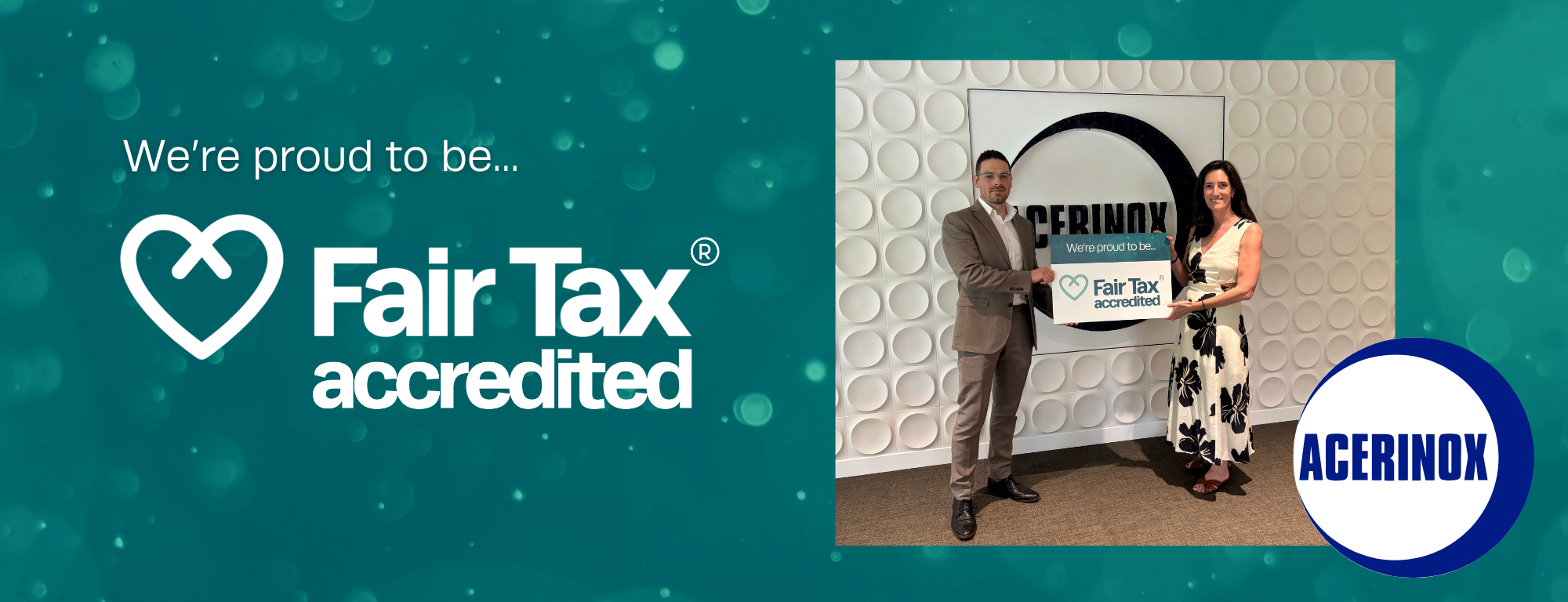
Spanish steelmaker Acerinox have been awarded the Fair Tax Mark by the Fair Tax Foundation, becoming the first steel company in the world to achieve certification under the globally recognised standard for responsible tax conduct. The Fair Tax Foundation are a non-profit organisation that promote tax fairness and corporate tax transparency, encouraging and recognising organisations that pay the right amount …
We are delighted to be shortlisted in the International Impact category at the UK Social Enterprise Awards 2026. Produced by Social Enterprise UK and Co-operatives UK, the Awards celebrate the leading lights in this sector, showcasing diversity and impact across 15 categories. Social enterprises are businesses that trade for a social or environmental purpose, and reinvest at least half their …


