
1. Contact us
Use our business enquiry form to let us know you want to explore your business becoming Fair Tax Mark certified. This only takes a couple of minutes. One of our certifiers will do a high-level assessment of your business structure and then contact you, detailing how the Fair Tax accreditation process will work, including benefits, costs and timings. These discussions are non-binding, and will present plenty of opportunity for you to ask questions and negotiate what is best for your business. We can go as slow or as fast as you like.
Our fees are based on the size, structure and complexity of your business.
2. Letter of Engagement agreed
Once scope, timings and costs of have been agreed, we will issue a Letter of Engagement. This sets out our responsibilities to you, including confidentiality. Once this is signed by both parties, we begin our Fair Tax Mark assessment of your business.
3. Assessment undertaken and feedback provided
The workload at your end is little or nothing initially. We review your recent Financial Statements, connected public communications and anything else you think is relevant.
We then present you with a detailed report that highlights how well you currently perform against the relevant Fair Tax Mark certification standard, together with suggested areas of improvement that would allow you to secure a Fair Tax Mark label.
This report takes the form of a scorecard. This preliminary assessment and scorecard normally takes four to eight weeks depending on the complexity of your business and the information required being readily available.
We will then happily engage in multiple rounds of conversation to help you get to a place where your business can improve their score (if needed) and secure their first Fair Tax Mark label. We can be lenient in some areas in the first year, as long as there is a solid commitment to improvement in the near future.
A final scorecard will be issued, hopefully confirming that your business can progress to full Fair Tax Mark certification.
Note: the process for micro-enterprises (revenue less than £1mn) differs in that our team will not issue a scorecard, but instead work with you to create a Fair Tax Mark Statement that you can use to clearly evidence your leading-edge responsible tax conduct.
4. Fair Tax Mark issued and announced
Once your reporting, policies and practice meet our requirements, you will be eligible for a Fair Tax Mark and we will work with you to announce your certification. We will issue a Licence Agreement that allows you to use the Fair Tax Mark label and related marketing materials in public communications for the qualifying period (usually 12 months). Together, we’ll celebrate your achievement and share the good news.
The above is an annual process, in line with each publication of your Financial Statements – to ensure that while things may have changed, the certification still stands true.
5. Annual re-certification
Fair Tax Mark certification is an annual process, with assessment and re-certification progressing afresh each year based on the information detailed in your most recent set of Financial Statements.
Re-certification usually progresses much more smoothly after year one. There is less work for the certified business, but at our end we still need to assess you annually to factor in your latest financial disclosures, policies and any corporate restructuring and business acquisitions that may have progressed.


A company’s tax practices are an essential indicator of its governance and the risk of its operations. For a number of years, we’ve been working with institutional investors, asset managers and analysts to help them integrate assessment of tax conduct into their portfolio risk management, and even helping them engage with companies. Major ongoing work with Shareholders for Change This …
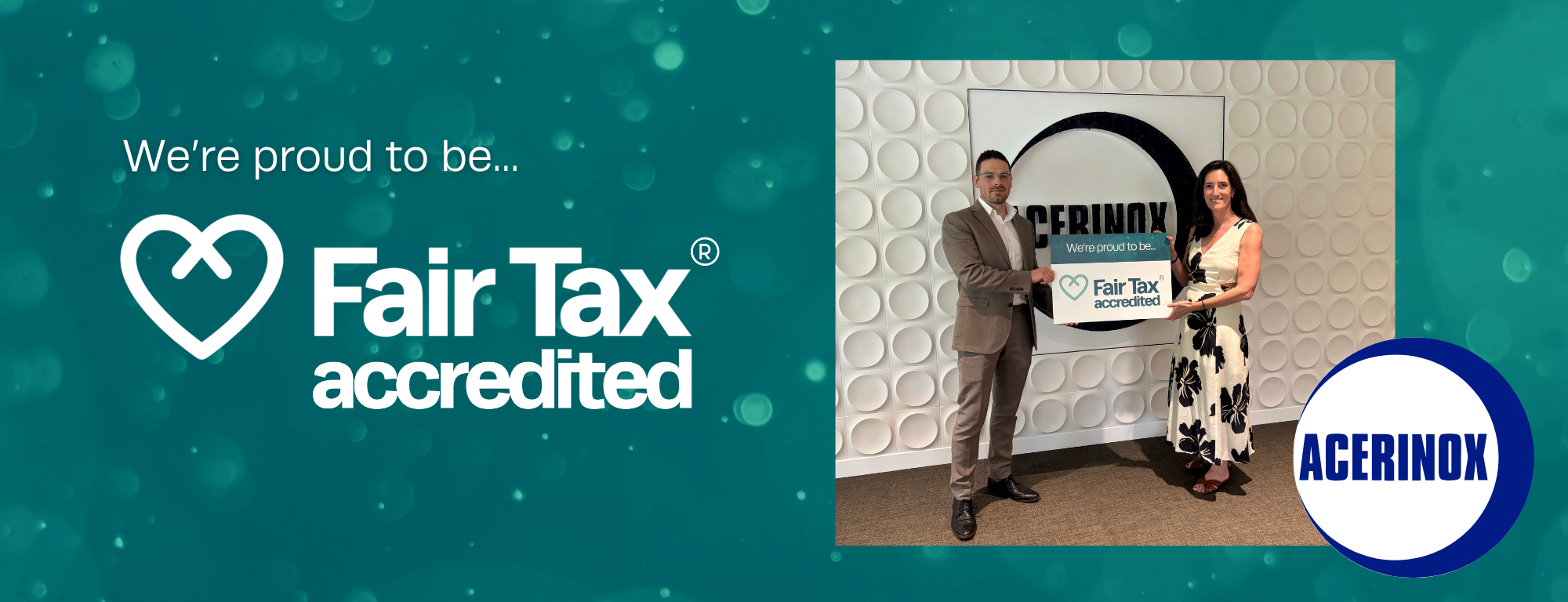
Spanish steelmaker Acerinox have been awarded the Fair Tax Mark by the Fair Tax Foundation, becoming the first steel company in the world to achieve certification under the globally recognised standard for responsible tax conduct. The Fair Tax Foundation are a non-profit organisation that promote tax fairness and corporate tax transparency, encouraging and recognising organisations that pay the right amount …
We are delighted to be shortlisted in the International Impact category at the UK Social Enterprise Awards 2026. Produced by Social Enterprise UK and Co-operatives UK, the Awards celebrate the leading lights in this sector, showcasing diversity and impact across 15 categories. Social enterprises are businesses that trade for a social or environmental purpose, and reinvest at least half their …


