
The law treats business differently, depending on their size and location. Our standards reflect this.
We have developed four standards (with associated guidance notes) to ascertain and encourage responsible tax conduct:
To obtain Fair Tax Mark certification, businesses are assessed against the criteria set out in the standard most appropriate for them.
There are many reasons to secure the Fair Tax Mark, from standing out in your sector and increasing customer confidence, to reassuring investors and boosting your brand via enhanced CSR and ESG credentials.
Our Fair Tax certification standards are based on the following principles.
A business should:


We have two standards for UK-only businesses:
Click on the guidance notes for details of the assessment criteria for your business. After you reach out to us, we will assess your business against these and tell you exactly what you’ll need to do (if anything) in order to secure the Fair Tax Mark. We’ll explain what you’re excelling at, and how to improve. Once the necessary thresholds have been met, you’ll be part of the fair tax community!


No matter where in the world your multinational enterprise is based, our Global Multinational Business Standard allows us to award you the Fair Tax Mark. The criteria against which we assess global multinationals focuses on five key areas: beneficial ownership, governance, tax policy, financial and tax reporting, and cash taxes paid.
The Fair Tax Mark Global Multinational Business Standard satisfies the key reporting recommendations of GRI 207, the Principles for Responsible Investment (PRI) and the OECD Guidelines for Multinational Enterprises on Responsible Business Conduct, but carries with it the additional weight of independent third-party verification undertaken by a trusted social enterprise.
Certification will also go a long way to demonstrate alignment to the EU’s Corporate Sustainability Reporting Directive and associated Minimum Safeguards, which flag ‘taxation’ as a material consideration.

The National Business Standard extends Fair Tax Mark certification to single-country businesses around the world with turnover above €1mn. It assesses four key areas: transparency, tax policy and governance, tax note disclosures and tax contribution. Businesses are expected to publish annual accounts, disclose beneficial ownership and management structures, and provide a clear explanation of where they trade.
Click on the guidance notes for details of the assessment criteria for your business. After you reach out to us, we will assess your business against these and tell you exactly what you’ll need to do (if anything) in order to secure the Fair Tax Mark. To find out more, watch this webinar launching the National Business Standard.

Put simply, to secure a Fair Tax Mark, a business should demonstrate a substantive commitment to responsible corporate tax conduct, financial transparency, public Country-by-Country Reporting (if a multinational) and beneficial ownership disclosure. There must be a binding corporate tax policy that explicitly shuns tax avoidance and the artificial use of tax havens, and no recent evidence of contradicting activities. Subsidiaries and related party transactions should be disclosed.
The scoring system underpinning the Fair Tax Mark standards is predominantly driven by the belief that ‘tax transparency’ encourages, and helps business demonstrate, responsible tax conduct. It also considers the tax contribution made by a business over a number of years. There are many good reasons why a business may not be paying high tax rates over a given period. For example, it may be loss-making in some years, or claiming legitimate tax reliefs within both the spirit and letter of the law. Such businesses can still secure a Fair Tax Mark by providing additional disclosures – especially in connection with shortfalls from the applicable headline rates of tax in operation.
The Fair Tax Mark standards and criteria have been developed with input from a broad range of stakeholders, including businesses, civil society organisations, tax experts and more.
A Technical Advisory Group, drawn from a range of backgrounds and perspectives, communicates throughout the year and meets on an ad hoc basis.
A public consultation process underpinned the development of our Global Multinational Business Standard.
While our standards and criteria detail the scoring system we use to assess and certify a business, we also provide a range of templates, papers and good practice examples. These include:
Our fees are largely influenced by business size and complexity. We regularly benchmark our fees against comparable certification schemes and strive to be as moderately priced as possible. Fees are subject to negotiation as required, and are agreed before a Letter of Engagement is issued.
Fair Tax Mark certification is an annual process, with assessment and re-certification progressing afresh each year based on the information detailed in your most recent set of Financial Statements.

A global research project are calling on companies to commit to take action on fair tax. And they recommend the Fair Tax Mark as a way to do so. The Embedding Project are a global research project working for the common good to help companies embed sustainability across their operations and decision-making. Their recent guide, Fair Tax: A Getting Started …
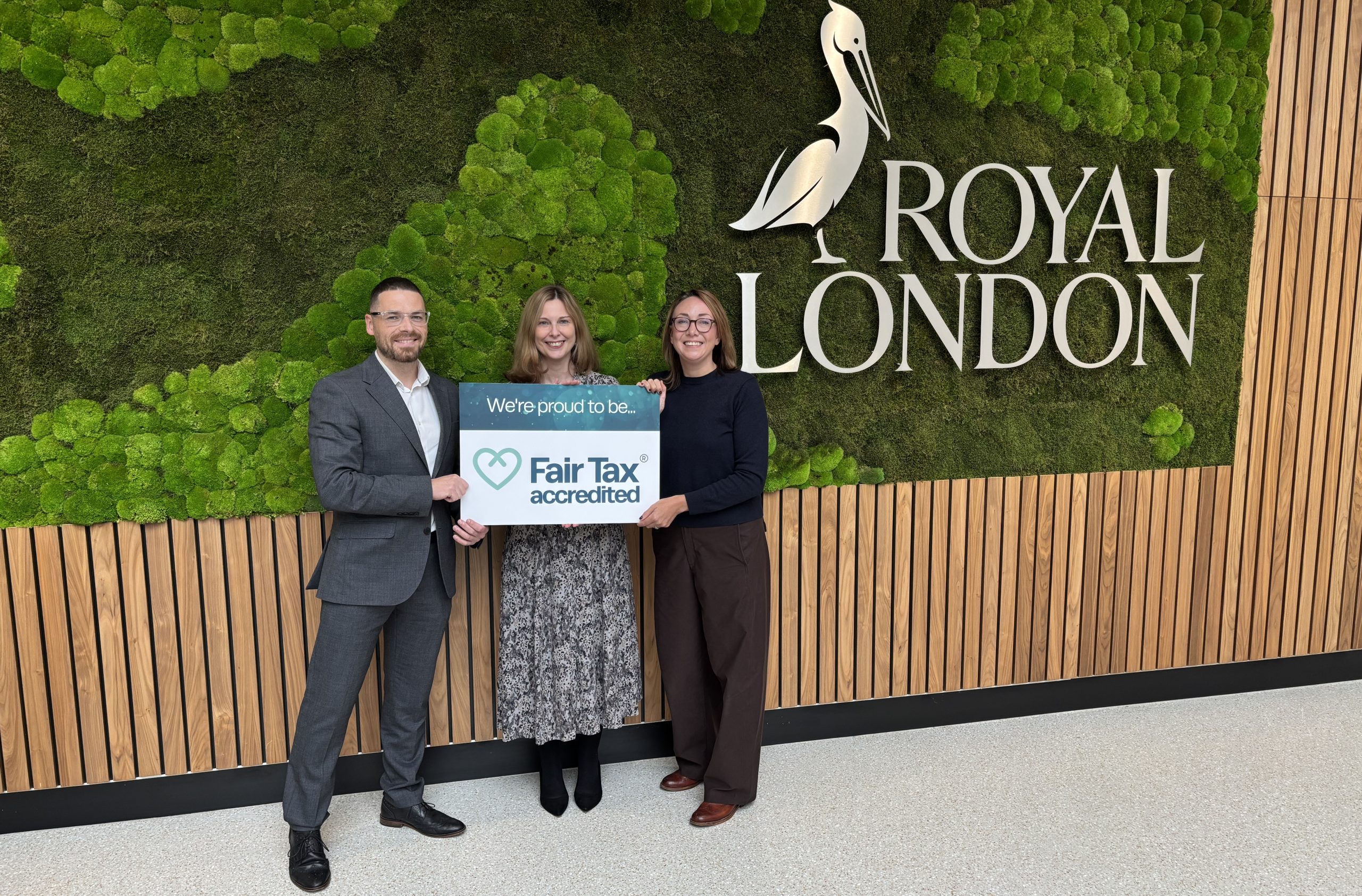
Royal London, the UK’s largest customer-owned life, pensions and investment company, have achieved the Fair Tax Mark, joining 275 businesses worldwide recognised for paying the right amount of tax, in the right place, at the right time. Awarded by the not-for-profit Fair Tax Foundation, the Fair Tax Mark is widely recognised as the gold standard for responsible tax conduct. To …

Greg Yates, senior ratings manager, Fair Tax Foundation Chloe Almond, research analyst, Fair Tax Foundation The Fair Tax Foundation have more than doubled the number of multinational enterprises covered by our research into implementation of the EU Public Country-by-Country Reporting Directive – from just over 300 in June 2026 to 650 at the end of September. Our newly updated …


